Culture · Books
In Defense of the Slow Chapter, Read on a Porch in July
Why the reader who lingers with a paperback and a ceiling fan may be doing something more radical than the reader who finishes.
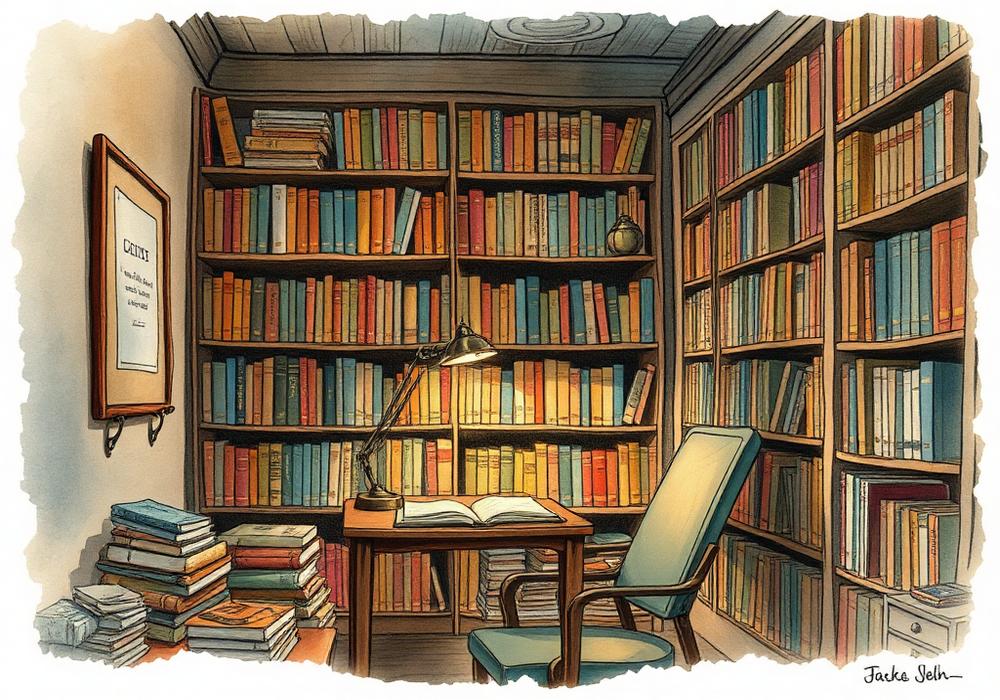
There is a particular kind of Florida afternoon — the sort that arrives in the middle of July, at about three-fifteen, when the light has gone from bright to opaque and the air seems to have thickened to a substance you could stir with a spoon — that is the ideal condition for the slow reading of a difficult book. I make this claim provisionally, but with some confidence, having tested it, this month, on my grandmother's porch in Bradenton, with a paperback of Middlemarch, a ceiling fan, and a glass of iced tea that lasted, remarkably, four whole chapters.
The slow reader, in our present moment, is a figure of some suspicion. She is not finishing. She is not moving on to the next thing. She has been on the same page, in some cases, for a quarter of an hour, and cannot, if asked, produce a summary. What she can produce, if pressed, is a sentence: usually the one at the top of the left-hand page, which struck her, for reasons she is still working out, as being exactly correct about a subject she had not previously known was a subject at all.
I want to argue, in this essay, that the slow reader is not failing at reading. She is doing a different thing than the reader who finishes, and the thing she is doing may, in the long run, be the more useful of the two. To finish a book is, of course, an achievement. But to sit with a paragraph until it becomes, in some quiet way, a part of the room — that is what porches, and ceiling fans, and Julys in Florida, were made for.